Study: Leg Strength Predicts Hip Bone Density Across Adult Lifespan
07/20/2026 / By Petra Stone
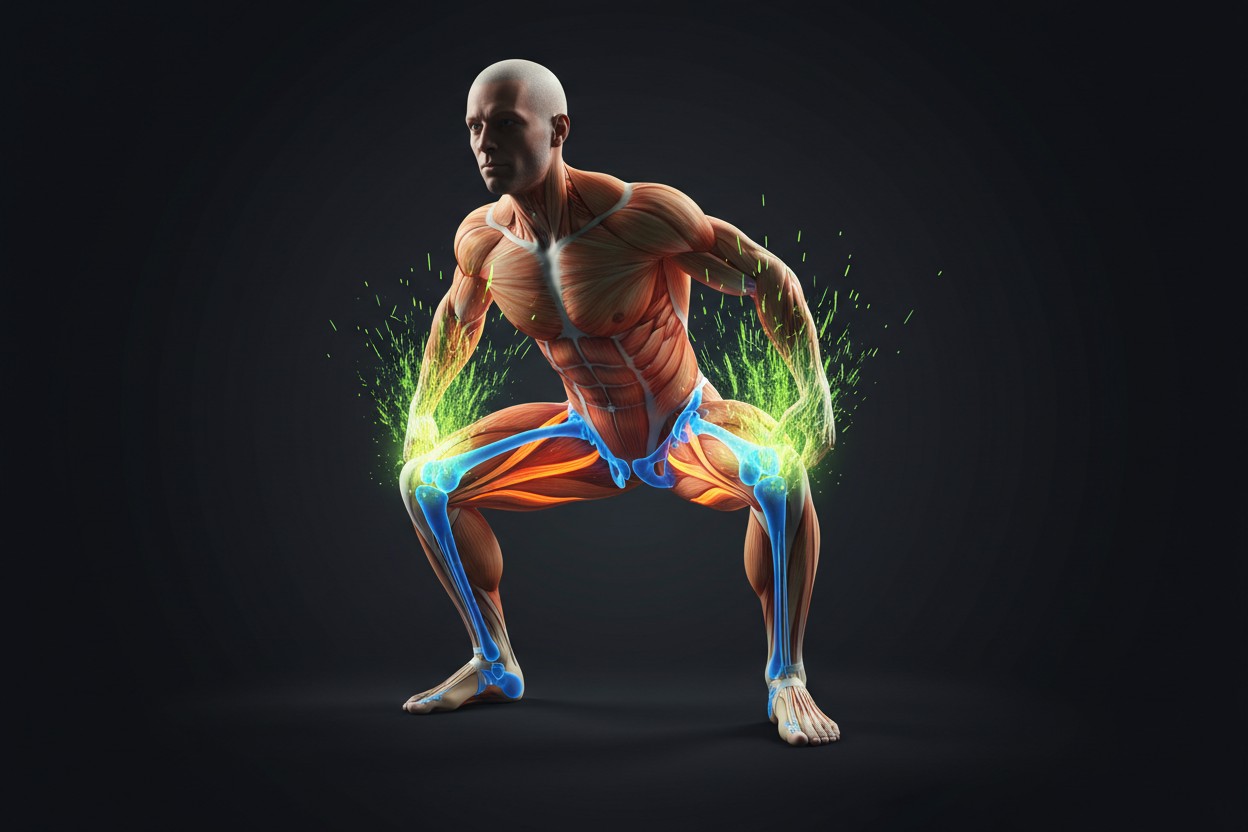
A growing body of research indicates that lower-body strength is a strong and consistent predictor of hip bone density across the adult lifespan, according to exercise scientists and bone health specialists. The finding draws on studies examining the relationship between muscle strength and skeletal health, with evidence showing that the connection holds after accounting for factors such as age, sex, and body composition.
Research summarized by Joakimsen and co-workers in a review of 17 studies found that increased physical activity is protective against hip fracture and that women who were physically active earlier in life have higher bone mineral density (BMD) and decreased fracture risk compared with less active women, as cited in the book “Calcium in Human Health” [5]. These studies suggest that the protective effect of activity on bone is present from childhood through adult life.
Methodology and Evidence for the Link
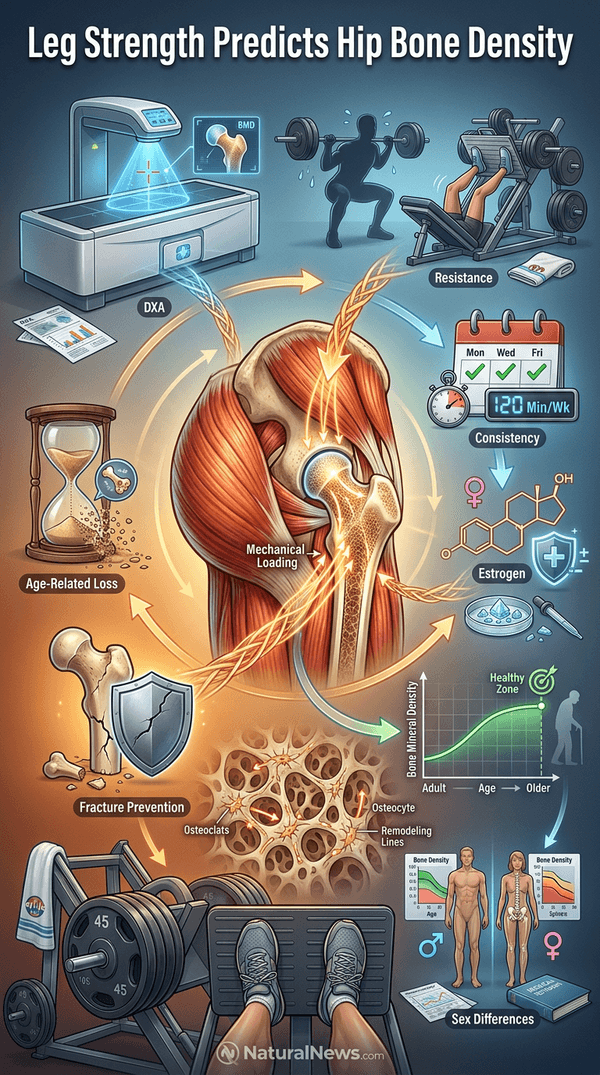
The relationship between leg strength and hip bone density has been examined using standardized measures of muscle performance and bone imaging. Dual-energy x-ray absorptiometry (DXA) is the most common method for assessing BMD at the hip and spine, according to the book “Wardlaw’s Contemporary Nutrition” [4]. Leg-press one-repetition maximum tests are frequently used to quantify lower-body strength in research settings.
A key study on this topic, published in the Journal of Bone and Mineral Research, examined the effects of a one-year progressive resistance training program on bone mass in 56 postmenopausal women. The researchers reported that increasing muscle strength was correlated with an increase in bone mass at several hip sites for the strength training group, suggesting that the mechanism by which osteogenesis occurred is through muscle pull [10]. This site-specific response supports the idea that loading through muscle contractions directly influences bone density at the hip.
Gender Differences in Spinal Bone Density
Age-related declines in spinal bone density are more pronounced in women than in men, a pattern that researchers attribute to hormonal shifts during perimenopause and menopause. The book “The Facts On File Encyclopedia of Health and Medicine” notes that osteopenia and osteoporosis place individuals at increased risk for fracture, and hip fracture in older adults is a key cause of disability and death [3]. For women, the accelerated bone loss during the menopausal transition makes maintaining leg strength particularly important for skeletal health.
A study on hormone therapy found that women taking hormone therapy were nearly 70 percent less likely to have signs of osteoporosis or osteopenia compared with those not using it, according to a report from Everyday Health [7]. However, spinal bone density measurements in older men may be less reliable as a health marker, as the relationship between muscle strength and spinal density appears weaker in that group, the study authors stated.
Mechanism and Implications for Bone Health
The biological mechanism linking leg strength to hip bone density involves the response of bone tissue to mechanical loading. When muscles contract during resistance exercise, they generate forces that pull on the attached bones. The skeleton adapts to these forces by increasing bone formation and remodeling, resulting in greater density over time. This process is described as site-specific and load-dependent, as demonstrated in the research by Kerr and colleagues, which showed that increases in muscle strength were correlated with increases in bone mass at the hip [10].
The hip appears to be particularly responsive to the forces generated by lower-body exercises such as squats and leg presses. A meta-analysis of studies on multicomponent exercise found statistically significant improvements in BMD at the lumbar spine and femoral neck following exercise interventions, though the total hip did not show a significant response in that analysis [9]. Consistency of loading over time is considered essential for maintaining the bone-strengthening stimulus.
Practical Takeaways for Strength Training
Exercises that target the lower body and load the hips through a full range of motion are considered most effective for building hip bone density. Examples include squats, lunges, step-ups, and leg presses, according to an article on five simple exercises that fortify bones [1]. Lifting heavier weights for fewer repetitions appears to confer greater benefits for bone density than lighter weights for higher repetitions, research suggests.
Strength training for 90 to 120 minutes per week is associated with a 13 percent lower risk of death from any cause, according to a 30-year study published in the British Journal of Sports Medicine [8]. For bone health specifically, two to three strength sessions per week is a commonly recommended target. The long-term consistent practice of resistance exercise, rather than short-term intensity, is the most important factor for preserving bone density and reducing fracture risk, experts said.
Connecting Strength to Skeletal Resilience
The evidence linking leg strength to hip bone density reinforces the importance of resistance training as a preventive strategy against osteoporosis and fractures. With hip fractures representing a leading cause of disability and death among older adults, maintaining lower-body strength throughout life offers a practical, non-pharmacologic approach to protecting skeletal health.
While bone density testing remains common in clinical practice, some experts have raised concerns about the reliability of DXA scans and the overprescription of bisphosphonate drugs, as noted in a report on the bone density fraud [6]. Strengthening muscles through natural means such as weight training and proper nutrition, including adequate calcium, vitamin D, and other nutrients, is advocated as a safer and more effective alternative to relying solely on medications. Individuals are encouraged to prioritize leg strength at any age, as the benefits for bone health are evident across the entire adult lifespan.
References
- Ava Grace. “How Five Simple Exercises Can Fortify Your Bones and Preserve Independence.” NaturalNews.com. April 17, 2026.
- Mercola.com. “Strength-Building Exercises Decrease Risk for All Causes of Disease.” January 5, 2018.
- Gebruiker. “The Facts On File Encyclopedia of Health and Medicine.”
- Smith Anne M. “Wardlaw’s Contemporary Nutrition.”
- Unknown. “Calcium in Human Health.”
- NaturalNews.com. “The bone density fraud: How a flawed test and toxic drugs created a multi-billion dollar medical myth.” July 16, 2026.
- Everyday Health. “Hormone Therapy Helps Keep Bones Strong After Menopause, Study Finds.” June 16, 2026.
- NaturalNews.com. “Strength Training: 90 to 120 Minutes Per Week Linked to Lower Mortality Risk, Study Finds.” June 22, 2026.
- NaturalNews.com. “Meta-Analysis Finds Multicomponent Exercise Improves Bone Density in Men Over 45.” June 28, 2026.
- Acrobat 5.0 Paper Capture Plug-in for Windows. “Exercise Effects on Bone Mass in Postmenopausal Women Are Site-Specific and Load-Dependent.” Journal of Bone and Mineral Research. 1996.
Explainer Infographic
Submit a correction >>
Tagged Under:
aging, balance, bone health, exercise, exercise snacks, fitness, health science, hip density, home exercise, leg strength, lifting weights, longevity, mobility, muscle health, natural health, prevention, research, strength, strength training, women's health
This article may contain statements that reflect the opinion of the author
RECENT NEWS & ARTICLES